My first serious experience with HFashionMall didn’t stem from a specific shopping goal; rather, I was in that classic state of mind where I wanted to refresh my wardrobe but didn’t want to make random, impulsive purchases.
At the time, my wardrobe felt a bit chaotic: I had plenty of clothes, but no cohesive style. Workwear, casual wear, and smart-casual pieces were all jumbled together. I’d have to throw outfits together at the last minute before heading out, often leading to that frustrating feeling of having a full closet yet nothing to wear.
Initially, I was just browsing for basic staples—pieces that were durable and high-quality. However, once I really explored HFashionMall, I realized that what set it apart from ordinary e-commerce sites wasn’t higher prices or a wider range of brands; it was the fact that the entire shopping experience was built around “style.”
I. First visit to HFashionMall: Shifting from “searching for clothes” to “exploring style concepts”
When I first arrived at HFashionMall, my instinct was to look for individual items—a jacket, a pair of trousers, or a shirt. I quickly discovered, however, that the products weren’t displayed as isolated pieces but were presented as part of “complete looks.”
For instance, a single jacket would be showcased in various styling scenarios—commuter, casual, and smart-casual—with full top-and-bottom combinations, rather than just showing the garment in isolation.
That was the moment I realized HFashionMall wasn’t asking, “What piece of clothing do you want to buy?” but rather, “What kind of style do you want to embody?”
This distinction is crucial because it fundamentally changes the shopping process—shifting it from “picking items” to “choosing a look.”
II. Experience with my first outfit: Commuter style isn’t just assembled; it’s designed
My first order was for a commuter-style set featuring a sharply tailored blazer and a pair of classic straight-leg trousers.
Upon receiving the items, my first impression wasn’t “this specific piece looks great,” but rather “this entire outfit works beautifully together.”
The blazer didn’t have an exaggeratedly tight fit; instead, it featured a structured design with a bit of breathing room and natural shoulder lines that didn’t make me look shorter. The trousers had a lovely drape—they didn’t cling to my legs, yet they held their shape perfectly without looking baggy.
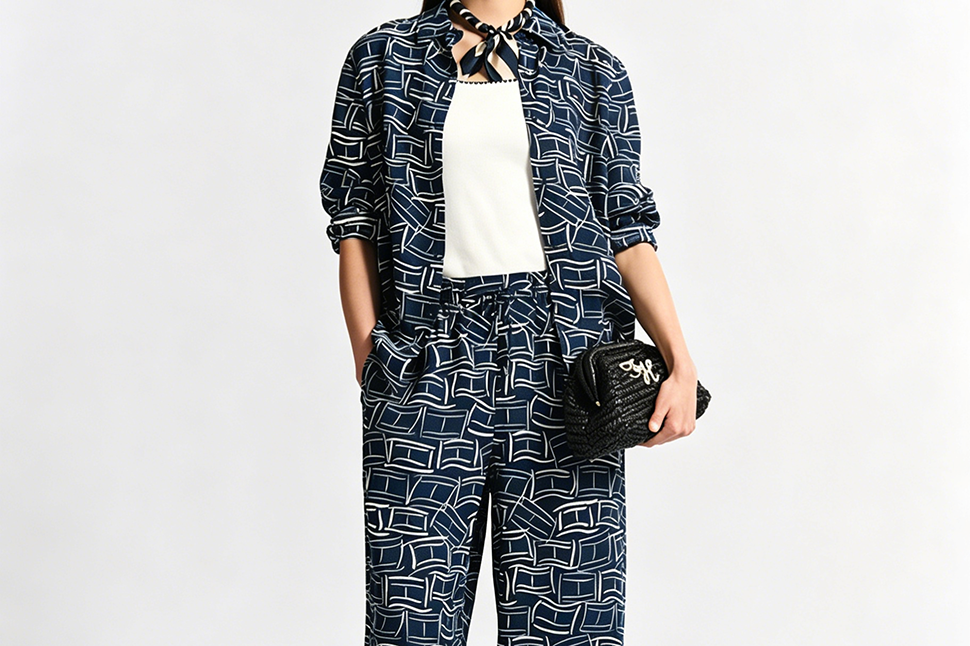
The most noticeable difference became apparent in my daily commute. I used to spend time agonizing over my outfit choices before heading out in the morning, but this set is essentially ready-to-wear—no extra adjustments needed.
It doesn’t feel like just “an outfit” to me; it feels like a “pre-curated look.”
III. A Second Approach: Casual Wear Becomes “Cleaner”
Later, I experimented with more casual pieces, such as basic knitwear, simple shirts, and lightweight outerwear.
In HFashionMall’s selection philosophy, “casual” doesn’t mean “thrown together”; it means an everyday style with a “cleaner structure.” For instance, a knit top might lack complex designs but feature subtle adjustments to the neckline, cuffs, or overall proportions, creating a sense of depth and layering.
My most striking realization was this: the clothes became simpler, yet the overall look became more stylish.
I used to feel that my casual outfits looked rather ordinary. However, the pieces I selected here—even the basics—exhibit a certain restraint in their details, such as superior drape, a consistent color palette, and a unified stylistic direction.
This shift wasn’t driven by any single garment, but rather by the entire curation system.
IV. A Shift in Style: From “Mix-and-Match” to a Cohesive System
After using the service for a while, I took stock of my wardrobe and noticed a distinct change: my old clothes were disjointed—each piece existed in isolation, making it difficult to form a cohesive whole. Now, however, my clothes are gradually evolving into a system where the pieces support one another.
My previous styling issues were typical: a top might look great on its own but prove impossible to pair with anything else; a pair of trousers might only match one or two tops, looking awkward if I tried to switch up the style; and clothes bought at different times often clashed stylistically. The result was a wardrobe that offered “plenty of choices but no unified direction.”
That changed after I started using HFashionMall. The new additions share a consistent style—not merely repeating the same designs, but aligning with a unified aesthetic logic. Consequently, combining them feels natural; even a quick, random pairing rarely looks out of place.
It’s not about constantly increasing the number of clothes you own; it’s about gradually eliminating stylistic chaos.
V. Shopping Experience: Closer to the “Department Store Sales Assistant” Model Than E-commerce Price Comparison
Usually, my shopping habit involves comparing prices, reading reviews, and checking materials before deciding whether to buy. On HFashionMall, however, this process is significantly streamlined.
The platform has already done the initial filtering for you: the brands are concentrated within established designer lines and department store selections, and the styles remain consistent rather than erratic. Consequently, you don’t need to spend much time wondering if a garment fits your overall aesthetic.
It feels more like picking items from a curated wardrobe than hunting for possibilities amidst a chaotic pile of merchandise. This experience effectively lowers the “decision cost.”
VI. Experiential Details: Clothing That “Fits Real-Life Scenarios”
Another shift is that the clothing aligns better with specific real-life scenarios.
For instance, workwear emphasizes stability and structure, while casual wear feels lighter yet retains its shape. Even seemingly basic pieces transition naturally between different settings without looking out of place.
Once, when I wore a basic outfit to meet a friend, their first reaction wasn’t “Did you buy new clothes?” but rather, “Your style seems more cohesive lately.”
That kind of feedback is far more significant than simply being told a single item “looks good.”
From “Buying Clothes” to “Building a Style”—A Shift in Consumer Logic
Looking back at my time using HFashionMall, the biggest change wasn’t the volume of clothes I bought, but the way I shop itself.
I used to shop based on “what I was missing”; now, it’s more about “gradually adding pieces to a cohesive style framework.” Clothes are no longer viewed as isolated items but are understood and utilized within a broader structure. When shopping shifts from “picking individual items” to “choosing a style,” the concept of the wardrobe itself becomes much clearer.