My first real encounter with JejuPass didn’t stem from meticulous travel planning, but rather a spur-of-the-moment decision. After landing on Jeju Island, I found my itinerary scattered and public transport inconvenient, so I decided to rent a car on the fly.
Initially, I just wanted a solution to the transportation hassle, but I never expected that this rental experience would mark the beginning of a shift in how I travel.
Renting a Car on Jeju Island: From a “Last-Minute Decision” to a Complete Change in Perspective
On that trip to Jeju, I had originally planned to simply tick off a list of tourist attractions. However, upon arrival, I realized the sites were far more spread out than I had imagined. While buses were an option, they were time-consuming, and taxis were unreliable.
So, I started looking up car rental options from my hotel, which is how I first encountered the service offered by JejuPass.
The entire process was far simpler than I expected; everything from booking to pickup was handled via my smartphone. The pickup point was near the airport, and the staff handed over the car immediately after verifying my details—no complicated red tape.
What truly changed my perspective was the sense of freedom I felt once I hit the road. Jeju Island’s roads are perfect for driving, with coastal highways offering expansive views. I spent the day moving entirely at my own pace—stopping at any café that caught my eye or pulling over to take photos whenever I found a beautiful stretch of coastline.
It was an experience completely different from joining a tour group or following a fixed itinerary; it felt like “taking the map back into my own hands.” That was the moment I realized: the essence of travel might not be where you go, but whether you have the freedom to decide how to get there.
Renting a Car in Busan: Shifting from “Taxi Mode” to “Route-Based Travel”
After that Jeju Island experience, I didn’t immediately continue using car rental services. However, while planning subsequent trips to Korea, I noticed that JejuPass offered similar services elsewhere—extending beyond Jeju to allow for car rentals in other Korean cities as well.
My first time doing this was in Busan.
Busan is completely different from Jeju Island; it features a blend of urban and coastal landscapes. Without a car, getting around to various locations can feel disjointed and fragmented. I chose to rent a car in Busan to link together Haeundae, Gwangalli, and a few more secluded cafes.
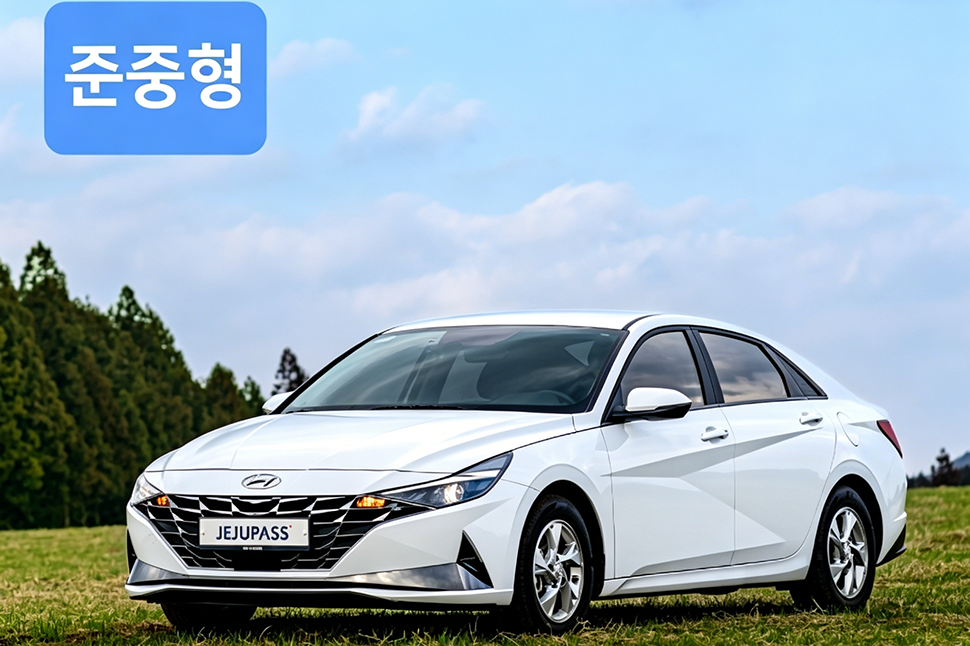
Unlike Jeju Island, the driving environment in Busan is more akin to typical city driving, yet the overall process remained smooth. The steps—picking up the car, inspecting it, and mapping out the route—had already become second nature to me.
The real shift lay in how I structured my itinerary.
Previously in Busan, my routine relied on a mix of taxis, the subway, and walking, with the inevitable friction of switching between modes of transport. With a car, however, I began planning my day around specific “routes”—covering the coastal area in the morning, the city center in the afternoon, and returning to the seaside in the evening.
The structural change was palpable: travel was no longer about moving from “point A to point B,” but about experiencing a “continuous route.” More importantly, I realized that renting a car wasn’t merely a “convenience tool,” but a way to fundamentally reshape the logic of my itinerary.
Taking Car Rentals Abroad: The Complete Okinawa Experience
It was my subsequent trip to Okinawa that truly convinced me this approach could become a habit.
Public transport in Okinawa has limited coverage, and the distances between attractions are vast, making car rental the default choice for most travelers.
I booked the car using the same method as before. The entire process—from pickup and inspection to hitting the road—felt completely familiar; I slipped into the rhythm effortlessly.
The driving experience in Okinawa differed again from Jeju, characterized by roads that loop around the island. Driving along the coast, the unbroken expanse of ocean views made it easy to lose sight of the “destination” altogether.
There was a distinct shift in my travel style: whereas I used to meticulously plan the duration of every stop, in Okinawa, I decided where to pause based entirely on road conditions and my own mood. I would stop at a beautiful beach or wander through a small town on a whim, free from the pressure of a strict schedule.
This sense of freedom felt closer to the true essence of travel than simply “checking off” a planned itinerary.
From “Rental Service” to “A New Way to Travel”: A Reliable Solution for Getting Around

Looking back at my rental experiences in Jeju, Busan, and Okinawa, they all served to confirm the same thing: renting a car is no longer just a “temporary mode of transport,” but has evolved into a reliable, replicable solution for travel. My experience using JejuPass for car rentals wasn’t just about whether a single transaction went smoothly; it was about the consistent logic of use maintained across different countries and cities. This consistency is, in itself, one of its most distinct advantages.
In terms of actual experience, the benefits of JejuPass can be broken down into several areas. First, the process is highly standardized; whether in Jeju Island, Busan, or Okinawa, the steps—from booking and pickup to return—are clear and straightforward, requiring minimal extra communication. This “consistency of process” is crucial for multi-city or international travel, as it eliminates the learning curve associated with adapting to different rental systems.
JejuPass also significantly enhances itinerary flexibility. Having a car transforms the travel structure from “point-to-point” movement reliant on public transport into a cohesive journey planned around a specific route. The direct result is the ability to visit more scattered attractions within the same timeframe while avoiding the fragmented schedules caused by waiting for public transport. This advantage is particularly pronounced in destinations like Jeju Island and Okinawa, where public transport options are relatively dispersed.
Furthermore, it is much more convenient for families or groups traveling together. Unlike the hassle of frequent transfers or splitting into multiple taxis, renting a car allows the entire group to move in sync, reducing the time lost to regrouping and waiting, and making it easier to stick to the planned itinerary.
The essence of independent travel lies not in where you go, but in how you move
After these few car rental experiences, my understanding of independent travel has shifted significantly.
I used to view travel simply as “choosing attractions and planning an itinerary,” but now I tend to see it as “designing the mode of movement.” When you have the freedom to determine your own route, the entire travel experience changes completely.