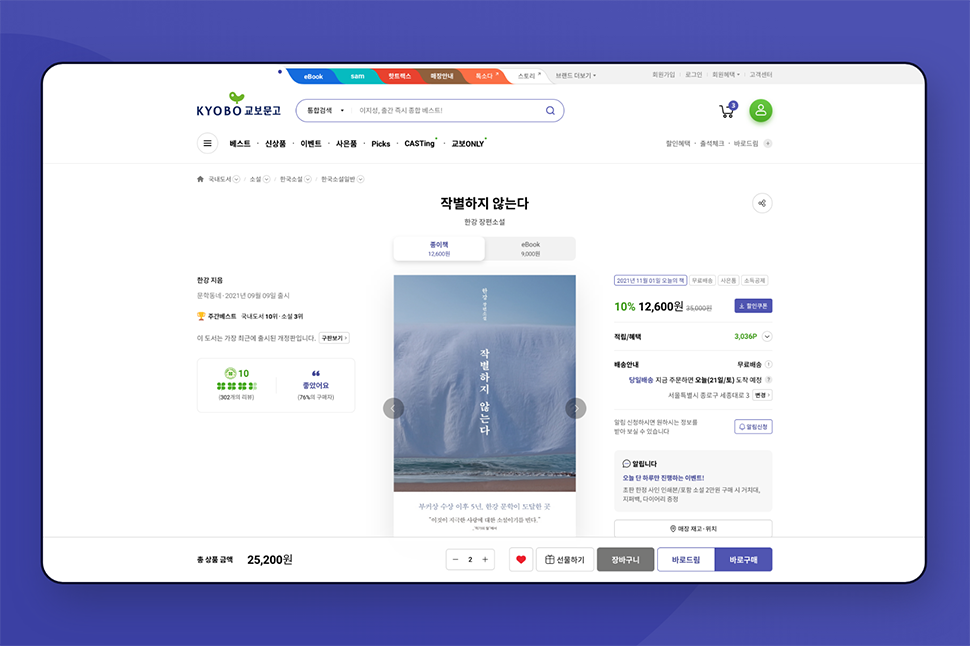
When I first visited the Kyobo Book Centre (KyoboBook) website, I was simply looking to buy a few original Korean books. However, after using the platform, I realized it functions more like a curated “cultural gateway.” You aren’t just entering an e-commerce page; you are stepping into a comprehensive consumer experience system centered on reading, music, and lifestyle.
This feeling is hard to define by a single function; it is not merely a “book-selling site” but a platform that constantly expands the boundaries of your interests. You might start out looking for a book, only to find yourself drawn to bestseller lists, browsing albums, or lingering in the section dedicated to creative lifestyle products.
Book Categories: From “Searching for Books” to “Curated Discovery”
After using the platform extensively, the most striking realization was that selecting books on Kyobobook is a process guided by the system itself.
Its book selection is incredibly comprehensive—covering everything from literary fiction and business management to children’s books, educational materials, foreign-language originals, and specialized academic texts—with virtually no noticeable gaps. Yet, the key isn’t just the sheer volume; it is the restraint and clarity of the presentation. Instead of dumping every title in front of you, the platform uses bestseller lists and recommendation systems to handle the initial filtering process.
I vividly recall browsing the bestseller list; I was just looking casually, but I kept getting drawn in by specific titles and synopses, eventually adding items to my cart without even realizing it. The lists aren’t based solely on sales volume; they blend editorial picks, reader trends, and thematic categories, making it easy to follow a “chain of reading interests.”
The experience becomes even more complete when you factor in the physical stores—such as the flagship branch in Gwanghwamun. You can check stock and place orders online beforehand, then pick up the books or browse them in person at the store. Standing inside the bookstore, you sense something that e-commerce lacks: you aren’t just completing a transaction; you are entering a genuine space dedicated to reading.
Audio-Visual Media and K-Pop Merchandise: The “Collectible Consumption” Experience at Hottracks
If books represent a rational entry point, the “Hottracks” section operates on a completely different consumer logic. When I first stepped into Hottracks, I was immediately drawn to the way the merchandise was displayed. K-pop albums weren’t just lined up like ordinary products; they were showcased in categorized zones—featuring various cover versions, random photocards, magazine tie-ins, and limited-edition merchandise—with every detail reinforcing their status as “collectible items.”
In practice, the contrast between the online and offline experiences is striking. Online purchases tend to focus on standard editions—prioritizing the content itself—whereas physical stores emphasize “experience and exclusivity,” offering pre-order benefits (POBs) that are often only available through local purchases or specific channels. This distinction directly influences purchasing decisions, making the act of buying feel more “emotionally driven” and “collector-oriented.”
More importantly, Hottracks is seamlessly integrated into the bookstore’s overall space; it isn’t merely a standalone e-commerce module but an integral part of the broader cultural consumption experience.
Sam E-books: Turning reading into an ongoing habit
Unlike the definitive nature of physical books, KyoboBook’s “Sam” e-book service feels more like a “restructuring of one’s reading rhythm.”
It operates on a monthly subscription model. While I didn’t have high expectations at first, the biggest shift after using it was a significant reduction in the “decision-making cost” of reading. Instead of constantly weighing whether a book is “worth buying,” I could simply dive right in.
The experience is consistently smooth during commutes or in spare moments. There is also synergy between physical and digital formats—some titles even offer combined print-and-digital purchase options—making the service incredibly convenient in practice.
Crucially, it subtly transforms reading habits—shifting the mindset from “picking out a significant book to read seriously” to “being able to start reading at any moment.” This change is particularly noticeable for frequent readers.
Stationery, Lifestyle Goods, and the Bookstore as a Destination
If the first three aspects of KyoboBook represent content consumption, the stationery, lifestyle, and creative goods sections extend that consumption into an experience that encourages lingering.
In KyoboBook’s physical spaces, items like stationery, literary-themed merchandise, gifts, houseplants, and lifestyle goods are naturally woven into the bookstore environment rather than feeling like mere add-ons. You’ll find stylishly designed notebooks, merchandise themed around authors, and even curated gift sets perfect for presents.

What impressed me most was the spatial experience at the Gwanghwamun flagship store. The café, reading area, and exhibition space flow seamlessly into one another without any jarring sense of separation. You see people engrossed in books, others casually flipping through magazines, and some simply browsing the lifestyle and stationery section.
I once went in intending only to pick up a book, yet I ended up lingering for a long time—wandering from the bookshelves to the lifestyle section, then sitting in the café to browse a magazine. That experience is hard to define merely as “shopping”; it felt more like naturally spending time within a cultural space.
A holistic experience: From bookstore to cultural gateway
Looking back at KyoboBook Centre, its true value lies not just in the books available for purchase, but in the way it constructs a continuously extending path of cultural consumption.
Books provide the foundational content; Hottracks captures pop culture; “Sam” expands the ways people read; and the lifestyle products and spatial design transform it all into a living environment where people want to linger.
It acts more like a gateway than a final destination. You might enter looking for a single book, but by the time you leave, you have often—without even realizing it—developed new habits regarding consumption and reading.